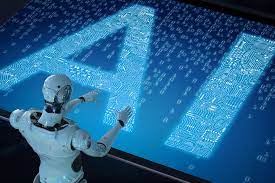
Artificial Intelligence has become the buzz feed drawing the attention of the globe. The focus gets weighteir in developed countries where its deployment is at a high speed in all spheres of enterprise and living.
The glittering arena of AI has reached the high elevation beyond initial calculation of the creators that the systems it innovated to independently plan, reason, and take multi-step actions to achieve a broad goal without needing constant humam prompts now is pulling all to the top mountain of AI.
But as the speed to innovate and deploy gain traction, so is the advent of caution, loudly yelling out to all users to beware. The caution announcers are heavy weight, high calibre and gaining traction as they speak out.
They are sending alarms that agentic AI and generative AI if deployed without set limits, safeguards, guided assistance and human oversight could create unintended outcome.
One such measured caution was released by UK National Cyber Security Centre, advising organisations deploying autonomous AI agents to put robust safeguards in place, warning that systems can carry out unintended or malicious activity when thay do not behave as expected.
This warning to organisations already engaging AI and those on the verge to deploy is for them to know how much autonomy an AI system needs and understand safeguards already built into the underlying model so that companies watch centres can respond when unassigned responsibilities stand in the midst of expected actions.
NCSC puts up a catalogue of recommendations that organisation needs to strictly adhere as AI embrace hots up – what to recognise; that organisations should identify potential failure scenarios, use carefully designed prompts and establish appropriate oversight. It also recommends logging, auditing and monitoring agent activity as part of security systems operations, alongside measures that make actions attributable to a particular system or user.
A prominent safety cap recommended was that organisations should maintain an emergency shutdown capability that ensures they are able to rapidly “pull the plug” if an agent behaves unexpectedly.
Regulators and stakeholders are all involved because the unintended spin off from AI could cause large scale concern and studies are gaining traction in research centres to arrest the use of AI from within to cause unintended mission and outsiders attacking the system and creating wide range of damage.
UK researcher, Beazley Security Labs, adds to the caution list organisation deploying agentic AI must embrace. Its CEO ALton Kizzidi, adding to the AI caution buzz said: “The headline this quarter is that AI made the security industry’s job noisier without making the attackers job fundamentally different. But AI assisted attacks are gaining in both frequency and effectiveness, and we seem to be watching the attackers leave in real time. As AI adoption in the enterprise increases, and as attackers continue to evolve tactics, clients need to remain vigilant and attend to cyber security basics.
“We also recommend organisations consider AI assessments to monitor what AI capabilities are in use across the organisation, how these tools are being used, and what is needed to improve management and control framework.” Also engaging is that AI could autonomously carry out actions by exploiting the vulnerabilities
Uk based firm, Databarracks in a recent survey, cited what autonomous attack AI is capable of. Spotting AI cyber capabilities, the firm cited the incident admitted by OpenAI, where one of its AI models, during testing in a controlled and isolated environment, autonomously carried out a coordinated cyber attacks against an organisation.
Another recent caution came from the Governor of Bank of England, Andrew Bailey, who warned that AI deployment without adequate preparation for breaches is creating gaps for attackers to walk in and disrupt the system which consequences for financial institutions.
Bailey said that AI landscape is in two sides of the coin, its increasing both the speed and sophistication of attacks against financial institutions. His words; “Frontier AI offers significant opportunities to strengthen cyber defence; but recent developments highlight the importance of ensuring that advances in capacity are matched by resilience and preparedness.
“Financial institutions, financial market infrastructure, and technology providers will therefore need to strengthen vulnerability management, response and recovery capabilities, and prepare for more severe scenarios involving simultaneous disruption across multiple firms or shared technology dependencies. These development reinforce the importance of robust response and recovery capabilities, including the ability to restore critical system and data from ‘bare metal’ following a significant cyber incident, as well as the importance of resilience amongst critical third-party technology providers and other common service providers, on which the financial system depends.”
Bill Gates, interestingly one of the promoters share his concerned on how and where AI should be deployed and should not, and also its negative impact on the world. He said, “artificial intelligence will either become the greatest equaliser ever invented, or the worst source of injustice,”
Gates painting a grim picture with words said AI will rapidly replace both white-collar and blue-collar jobs much faster than past technologies.
Concern rubs on deepening inequality. He notes that without proper planning, the economic benefits will flow to a wealthy few while leaving displaced workers and local communities behind.
The world is hooked but not prepared for the greatest invention of all technologies combined. Unfortunately, and up and until now, Gate said the world has’ no plan’ to ease this turbulent transition because economic and geopolitical pressures push full speed ahead.
Gates has put his solutions in three compartments, – first, tax AI and robots and automated machines to slow down the rush to replace human workers and fund social safety nets.
The second compartment centres on ‘human reserved’ jobs. He said such jobs as caregiving or education, even if machines can do them cheaper should be off limit.
Third resonates with the concern earlier addressed, global regulation. He advocates national and international organisations to manage safety risks, cyber threats, and economic disruption before public trusts break down.
Back in May 2026, Pope Leo XIV expressed views that AI adoption should come with safeguards and with human dignity in front. The Pontiff said AI is a powerful tool evented by humans that is not inherently evil, but warns that it is never morally neutral and poses major risks to human dignity, labour and relationship.
The Pope rates AI innovation high and this reflected as a content in his first encyclical, titled Magnifica Humanitas: “On Safeguarding the Human Person in the Time of AI.” He cleared that innovation must serve human flourishing and common good rather than just corporate profit or efficiency.
The Pope also said that pursuit of financial gain must not justify replacing human workers or sacrificing jobs through automation.
By not putting humans in front, he said AI can erode human relationships by reducing people to data points, flooding young minds with distorted content, and making life harder for families.
His call for regulation which Gates shared, advocates robust local and international legal framework, and independent oversight to ensure no single idealogy or monopoly dictates AI systems. The Vatican insists that human beings – never artificial intelligence – must retain absolute and final responsibility over decisions regarding weapons and conflict.
Despite the concern streaming after AI buzz, the tech innovation scores high for insurance in the UK but within governed operating layer.
NTT Data a UK firm that has launched AI platform designed to help insurers manage complex workflows while maintaining regulatory controls and human oversight holds AI under guide high.
Bruno Abril, “lead for the insurance industry at NTT Data said =, “Insurance is built on human judgement that understands risk, prices fairly, stands behind promises when it matters most. AI strengthens the ability of insurers to meet that responsibility, and NTT Data AI for insurance supports human expertise with intelligent systems that work within a governed operating layer for enterprise scale transformation. The result is that insurers can move from AI enabled workflows to AI delivered operations, at enterprise scale and with the governance that regulators and board demand.
The defence ministry is another hub for AI welcomed penetration. This holds sway across military industrial corporation in the West. Just at the end of August when Japan released its defence budget of over $55bn it caped it with a clear focus on agentic AI.
For the media AI has become the major companion of western media network. The Group CEO Billsbox Services Limited, Monday Ashibogwu in a recent media event had a paper on, “Publishing in an Era of Artificial Intelligence,” he says AI is an enabler and not a replacer of journalism.
Ashibogwu holds firmly that “Artificial Intelligence will not replace journalist. Journalist who use Artificial Intelligence will replace those who don’t.”
According to him, AI offers, both disruptive – and the biggest opportunity in a generation. And by its definition, the ability of machines to perform tasks traditionally requiring human intelligence. The speed of performance far outsmarts the human intelligence but prone to misbehave.
Ashibogwu, a fervent advocate of AI says the success for publishing lies in detecting what he listed as the ten threats every editor should recognise – hallucination, bias, fabricated quotations, deepfakes, plagiarism, copyright violation, privacy breaches, manipulation, misinformation and loss of public trust.
These concerns notwithstanding, he rests his case on AI use in the media clear, “The future belongs neither to traditional journalism nor to Artificial Intelligence alone. It belongs to journalists who combine human wisdom with machine intelligence.”