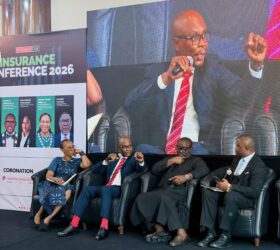
The level of insurance embrace in the Nigeria scene is still a long journey to the wetlands of insurance acceptance. This view declared by the Commissioner for Insurance, National Insurance Commission NAICOM, Mr. Olusegun Omosehin today in Lagos at the opening of the 2026 Insurance Week, tells the insurance industry that lately there are sign posts indicating progress, but clear a view suggests tools to plough to reach clear understanding by the public need to remain in the hands and at arms stretch.
Omosehin engaging the thought processes of insurance professionals at the event said observable gaps between the potential insurance buyers and the providers beckon despite the inherent value of insurance as a critical of management.
“Despite the inherent value of insurance as a critical risk management tool, insurance appreciation remains best parameter for measuring its impact. A major contributor to observable gaps in the desired impact is the persistent lack of adequate public understanding of insurance products, processes, and benefits,” he stated
According to him, “This reality underscores the need for a more deliberate and strategic approach to public engagement.” He takes it further, “The success of insurance in any economy is fundamentally anchored on the level of public understanding, trust, and acceptance. Without awareness, there can be no demand. Without understanding, there can be no trust. And without trust, sustainable growth cannot be achieved.”
Still reminding the attendees at this year’s event, the CFI said, “it is important to reflect on the central message of last year’s Insurance Week, where we emphasised the urgent need to deepen public engagement and strengthen trust in insurance. That message remains as relevant today as ever.”
Baring his mind on how to fix the gap defined by lack of understanding of doings and workings of insurance, Omosehin presents the Commission’ playbook, “We must rethink and reposition our communication strategies. Public awareness campaigns must move beyond generic messaging and evolve into more targeted, relatable, and sustained initiatives. We must communicate in languages people understand, through platforms they trust, and using real-life scenarios that resonate with their everyday experiences.
“It is not enough for people to simply know that insurance exits- they must understand how it works, why it matters, and howit can protect their lives, assets, and aspirations.”
NAICOM helmsman did not just present what the operators should do, he went further to show what the is doing… “the Commission has continued to champion initiatives that promote financial literacy, consumer education, and transparency. We are leveraging strategic partnerships, engaging diverse stakeholders, and deploying innovative communication channels to reach underserved communities, small businesses, and emerging segments of the economy.”
Noting that achieving meaningful and lasting impact requires collective action, the Commission Chief emphasised that “insurers have a pivotal role to play in reshaping public perception and strengthening confidence in our industry.”
He also upbraided insurers for not shifting from the recurring criticisms of the insurance sector which has been the perceived disconnect between product offerings and the actual needs of policyholders; where there is a perception that insurance companies only sell what has been produced, rather than producing what can be sold.
His clear view, “This perception must change, and that change must begin with how products are conceived, designed, and delivered. Insurers must deliberately transition from a product-centric approach to a customer-centric model. This entails actively involving clients in the product development process seeking their input, understanding their expectations, and designing solutions that align with their real-life needs.
“When clients are actively engaged in product design, several positive outcomes emerge. Products become more relevant and accessible, pricing structures have become more acceptable, and, most importantly, trust and ownership are significantly enhanced,” he declared.
The outcome of this he stated impacts not just insurance industry alone, “By designing products that cater to strategic sectors, entrenches an attempt to deliberately align and contribute meaningfully to economic development whilst expanding its reach and relevance